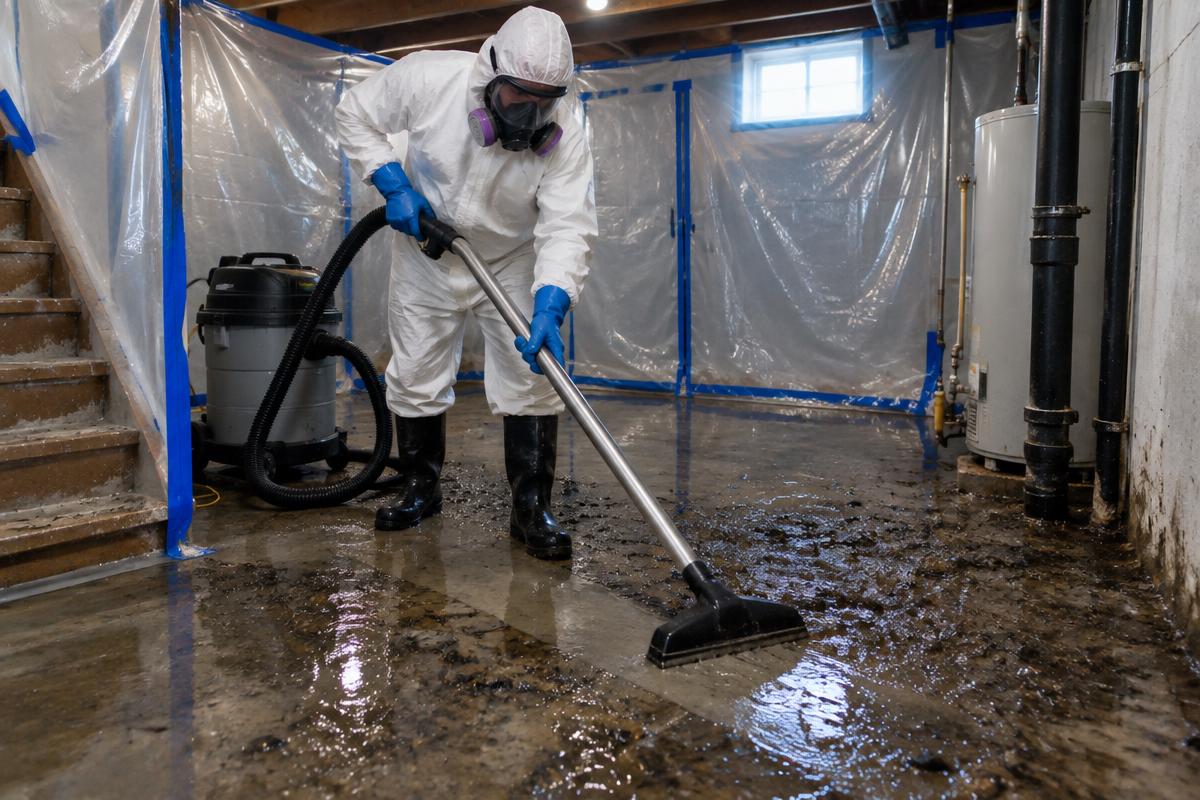
Sewage backups are one of the most unpleasant — and potentially hazardous — types of water damage. Sewage can contain bacteria, viruses and other contaminants, so it should not be treated like a clean-water leak.
Our crew uses protective equipment and containment to remove sewage, discard porous materials that cannot be safely cleaned, and clean and dry the affected structure.
Common causes
- Blocked or root-damaged sewer laterals
- Municipal sewer surcharge during heavy rain
- Missing or failed backwater valve
- Grease and debris build-up in drains
Warning signs
- Water rising from floor drains, toilets or showers on the lowest level
- Strong sewer odour
- Gurgling drains
- Dark, debris-laden water
Immediate safety steps
- Do not attempt to clean up sewage yourself.
- Keep everyone, especially children, older adults and pets, away from the affected area.
- Avoid using plumbing fixtures that drain to the backed-up line.
- Wash hands thoroughly if you have had any contact.
How our sewer backup cleanup and disinfection process works
- 1
Protect & contain
Crew uses protective equipment and isolates the area to limit spread.
- 2
Remove sewage
Sewage water and solids are extracted and disposed of appropriately.
- 3
Discard porous materials
Carpet, pad, insulation and lower drywall affected by sewage are generally removed.
- 4
Clean & disinfect
Hard surfaces are cleaned and treated with appropriate antimicrobial products.
- 5
Dry
The structure is dried and monitored.
What to expect when you call
- A firm recommendation on what must be discarded
- Clear guidance on when the area may be reoccupied
- Advice to have a plumber inspect the drain line
Homes and businesses
Residential: Basement bathrooms and laundry areas are the most common entry points for sewer backups in homes.
Commercial: Restaurants and multi-unit buildings need sewage cleanup that keeps staff and residents away from affected areas.
Sewer Backup Cleanup and Disinfection in Richmond Hill
Intense summer storms in York Region can surcharge sewer systems, which is one reason some Richmond Hill homeowners install backwater valves.
Learn more about the areas we serve in Richmond Hill, or return to the Flood Services Richmond Hill homepage.
Sewer Backup Cleanup and Disinfection FAQs
Is sewage backup cleanup different from regular water damage?
Yes. Sewage is treated as contaminated water and requires protective equipment, removal of porous materials and cleaning and disinfection of surfaces.
Can my belongings be saved?
Hard, non-porous items can often be cleaned. Soft items such as upholstered furniture, mattresses and stuffed toys that contacted sewage are usually discarded.
Who is responsible for the sewer line?
Responsibility depends on where the blockage is. Contact a plumber and the Town of Richmond Hill if you suspect a municipal issue.