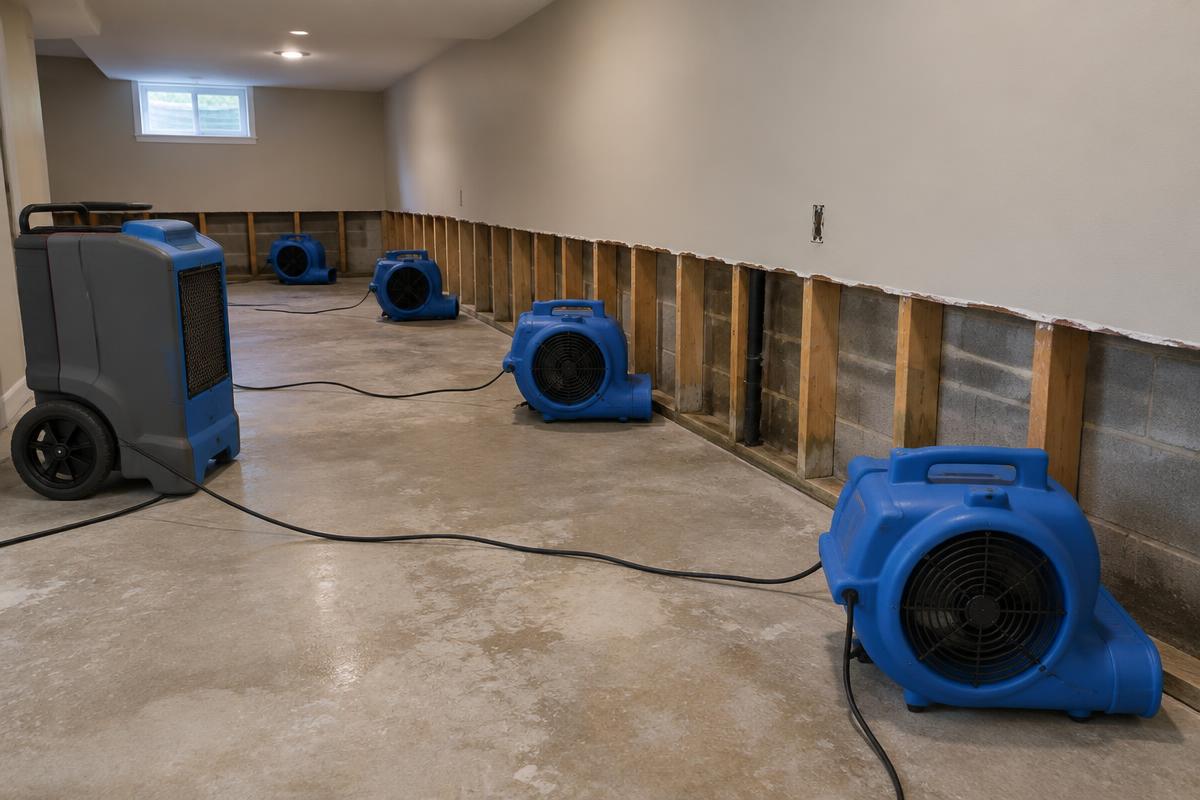
Removing visible water is only the first half of the job. Drywall, subfloors, framing and concrete absorb moisture that cannot be seen or mopped up, and that hidden moisture is what leads to warping, odours and mould.
Structural drying uses a planned combination of extraction, airflow and dehumidification, with regular moisture readings, to return materials to normal moisture levels.
Common causes
- Any water loss involving flooring, walls or ceilings
- Water that has wicked up drywall
- Saturated carpet and pad
- Water trapped under hardwood or laminate
Warning signs
- Baseboards or drywall that feel soft
- Cupping or buckling wood flooring
- Persistent dampness days after a leak was fixed
- High indoor humidity and condensation on windows
Immediate safety steps
- Stop the source of water before drying can be effective.
- Do not run household fans on contaminated water — it can spread contaminants.
- Keep doors to affected areas closed unless advised otherwise.
How our water extraction and structural drying process works
- 1
Extraction
Standing water is removed from floors, carpets and pad.
- 2
Moisture mapping
Meters and, where useful, thermal imaging help identify wet areas behind surfaces.
- 3
Equipment placement
Air movers and dehumidifiers are positioned for the space and materials.
- 4
Monitoring
Readings are taken during follow-up visits and equipment is adjusted.
- 5
Dry verification
Equipment is removed once readings show materials have reached dry targets.
What to expect when you call
- Equipment that runs continuously and makes some noise
- Periodic check-ins to record moisture readings
- A clear point at which drying is confirmed complete
Homes and businesses
Residential: Homes benefit from targeted drying that can sometimes save drywall and cabinetry that would otherwise be torn out.
Commercial: Commercial drying plans consider occupied areas, power availability and after-hours access.
Water Extraction and Structural Drying in Richmond Hill
Humid Ontario summers can slow natural evaporation, which is one reason dehumidification matters for drying in Richmond Hill basements.
Learn more about the areas we serve in Richmond Hill, or return to the Flood Services Richmond Hill homepage.
Water Extraction and Structural Drying FAQs
Why can't I just use fans?
Fans move air but do not remove moisture from it. Without dehumidification, moisture can simply move from floors into the air and into other materials.
Will you need to remove my drywall?
Not always. Drywall exposed to clean water for a short time can often be dried in place. Drywall exposed to contaminated water, or that has been wet for long, is usually removed.
How do you know when it is dry?
We compare moisture readings in affected materials with readings from unaffected areas of the same building.