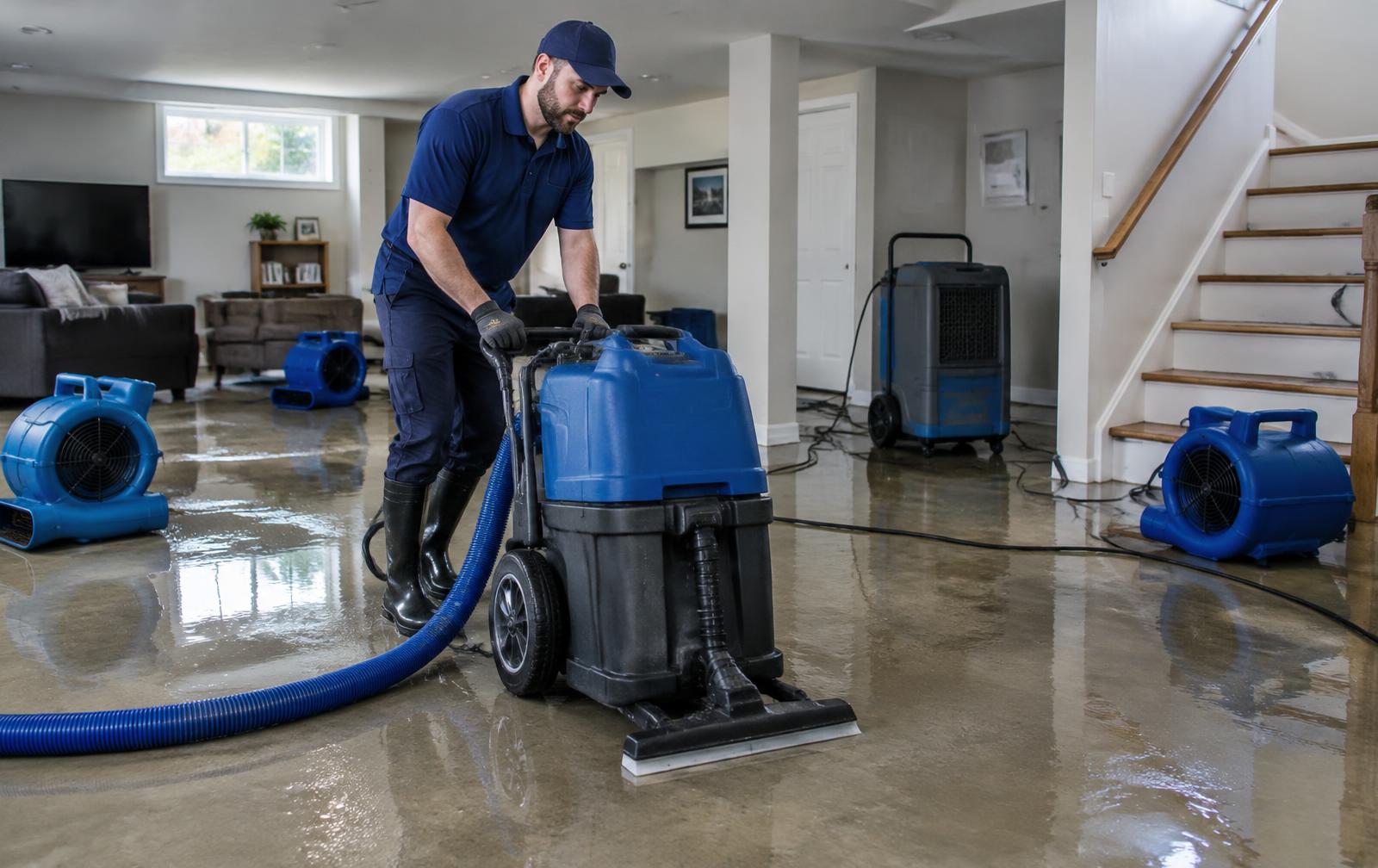
Basements are the most common place for water damage in Ontario homes. They sit below grade, house water heaters, washers and sump pumps, and are often finished with carpet, drywall and insulation that hold water.
Our basement flood cleanup covers water removal, removal of unsalvageable finishes, cleaning and drying of the structure, and guidance on what may need to be repaired afterwards.
Common causes
- Sump pump failure or power outage during a storm
- Foundation cracks and window well leaks
- Floor drain or sewer backup
- Water heater or laundry hose failure
- Snowmelt pooling against the foundation
Warning signs
- Water around the floor drain or sump pit
- Damp carpet near exterior walls
- Efflorescence (white residue) on concrete
- Musty smell in the basement
Immediate safety steps
- Do not walk into a flooded basement if water may be in contact with outlets, the furnace or the electrical panel.
- If water came from a floor drain, assume it may be sewage and avoid contact.
- Keep children and pets upstairs.
How our basement flood cleanup process works
- 1
Determine the source
Identify whether water came from groundwater, a plumbing fixture or a drain.
- 2
Extract water
Remove standing water from concrete, carpet and stored items.
- 3
Remove damaged finishes
Carpet pad, baseboards, insulation and lower drywall are removed where required.
- 4
Clean & treat
Exposed surfaces are cleaned appropriately for the water type.
- 5
Dry the structure
Concrete, framing and remaining drywall are dried and monitored.
What to expect when you call
- A walkthrough of what is wet and why
- Help separating salvageable and non-salvageable contents
- Documentation to support an insurance conversation
Homes and businesses
Residential: Finished basements used as rec rooms, bedrooms or rental suites need careful assessment of flooring, walls and contents.
Basement Flood Cleanup in Richmond Hill
Richmond Hill homes built on clay-heavy soils can see water collect against foundations during spring thaw, making basement seepage a recurring concern for some owners.
Learn more about the areas we serve in Richmond Hill, or return to the Flood Services Richmond Hill homepage.
Basement Flood Cleanup FAQs
What should I do first when my basement floods?
Stay safe: do not enter if electrical hazards are possible. Stop the water source if you can, move valuables, take photos and call for professional help.
Is my basement carpet salvageable?
Carpet soaked by clean water for a short time may be saved. Carpet pad is usually replaced. Carpet exposed to sewer or outside flood water is generally discarded.
Do you fix the cause of the flooding?
We focus on cleanup and drying. We can point out what we observe — for example a failed sump — so you can arrange the appropriate repair with a plumber or waterproofing contractor.
Can mould grow after a basement flood?
Mould can begin to grow on damp organic materials within roughly 24 to 48 hours under the right conditions, which is why prompt drying matters.