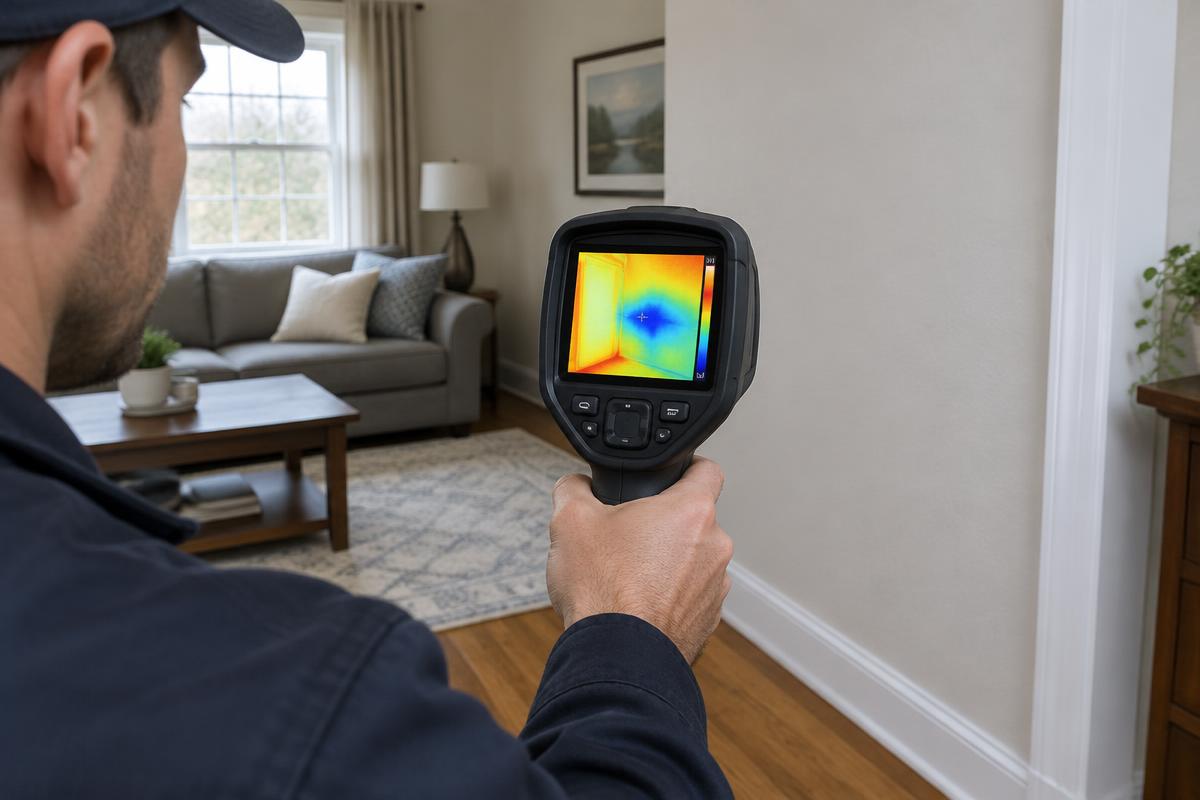
Mould needs moisture to grow. After water damage, an inspection looks for visible growth and, just as importantly, for the moisture that allows it to develop.
Inspection is a separate step from remediation. Its purpose is to understand whether there is a problem, how extensive it may be and what is causing it — not to sell removal you may not need.
Common causes
- Water damage that was not dried quickly
- Ongoing leaks
- High humidity and condensation
- Poor ventilation in basements and bathrooms
Warning signs
- Visible spotting on walls, ceilings or wood
- Persistent musty odour
- Staining after a past leak
- Condensation on windows and cold surfaces
Immediate safety steps
- Do not disturb suspected mould — scraping or sanding can spread spores.
- If you have health concerns, consult a medical professional.
How our mold inspection and testing process works
- 1
History
Discuss any past water events and symptoms of concern.
- 2
Visual inspection
Inspect accessible areas for visible growth.
- 3
Moisture assessment
Use meters and thermal imaging to find moisture sources.
- 4
Sampling (if needed)
Where sampling is warranted, samples are sent to an independent laboratory. Confirm with us whether sampling is available for your situation.
- 5
Findings
Explain what was found and whether remediation is recommended.
What to expect when you call
- An honest assessment, including when no remediation is needed
- Identification of moisture sources to correct
Homes and businesses
Residential: Common after basement floods, in bathrooms without adequate ventilation and in closets on exterior walls.
Commercial: Useful for property managers responding to tenant concerns.
Mold Inspection and Testing in Richmond Hill
Humid summers and long heating seasons in Richmond Hill can both contribute to condensation and moisture problems indoors.
Learn more about the areas we serve in Richmond Hill, or return to the Flood Services Richmond Hill homepage.
Mold Inspection and Testing FAQs
Do I always need mould testing?
Not always. When mould is visible, sampling is often not necessary to decide on remediation. Sampling can help in specific situations, such as when growth is suspected but not visible.
What's the difference between inspection and remediation?
Inspection identifies whether mould and moisture problems exist. Remediation is the process of containing and removing mould-affected materials and correcting moisture.
Is all mould dangerous?
Mould can affect indoor air quality and some people are more sensitive than others. We do not make medical claims — consult a health professional with health concerns.