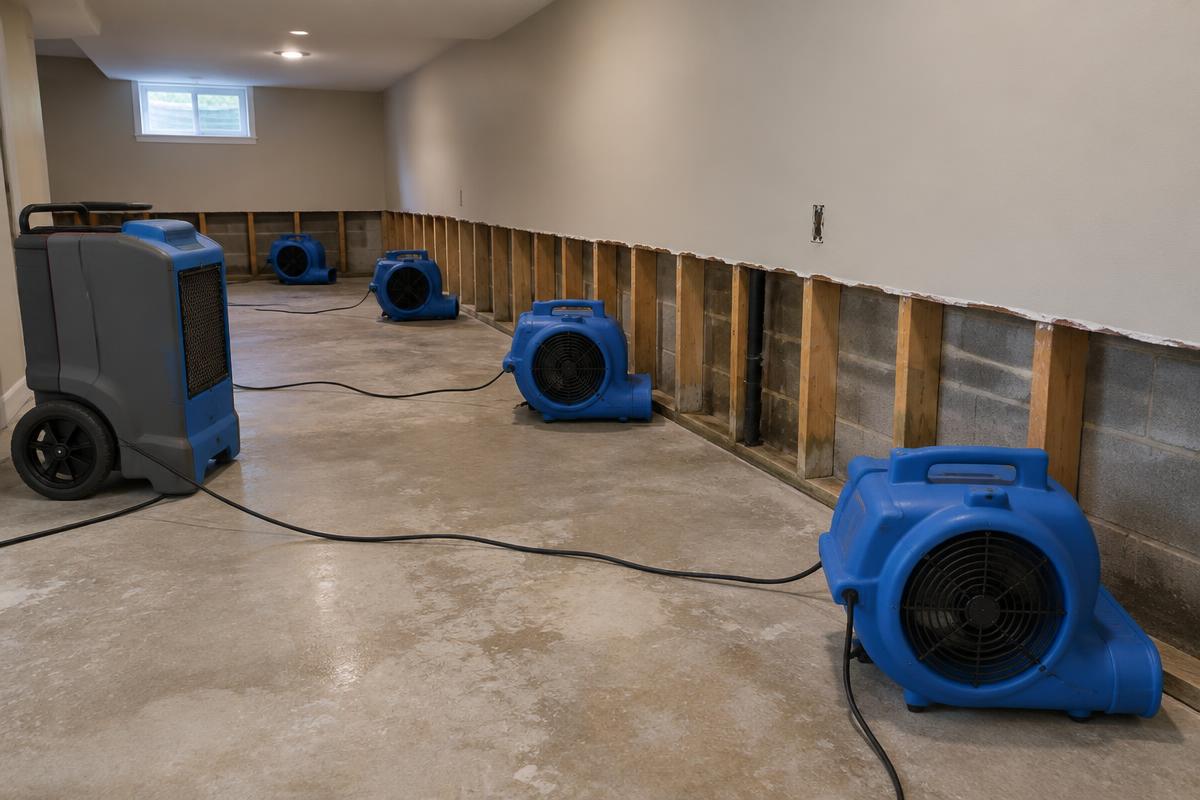
A flood is different from a simple leak. Water that enters from outside — through foundation cracks, window wells or a backed-up drain — often carries soil and debris, and can reach a large area of a property in a short time.
Flood cleanup combines water removal, debris and silt cleanup, removal of materials that cannot be salvaged, cleaning and sanitizing of affected surfaces, and controlled drying before any rebuilding begins.
Common causes
- Heavy rainfall overwhelming lot grading or eavestroughs
- Rapid spring snowmelt
- Window well and foundation seepage
- Municipal or private drain backups
- Failed sump or backwater valve
Warning signs
- Water entering at the base of walls or through the floor
- Mud or silt lines on walls and furniture
- Musty odour developing within a day or two
- Wet insulation behind finished basement walls
Immediate safety steps
- Treat flood water from outside as potentially contaminated — avoid skin contact and keep children and pets away.
- Never enter a flooded basement until you are sure the electrical supply to that area is off.
- Do not use household vacuums to remove water.
- Discard food or medications that contacted flood water.
How our flood cleanup and restoration process works
- 1
Inspection
We determine where water entered, the category of water and which materials are affected.
- 2
Extraction & debris removal
Water, silt and debris are removed from floors and surfaces.
- 3
Controlled removal
Saturated materials that cannot be dried, such as soaked carpet pad or wet insulation, are removed and bagged.
- 4
Cleaning
Remaining structural surfaces are cleaned and treated appropriately for the type of water involved.
- 5
Drying & monitoring
Drying equipment runs until moisture readings confirm materials are dry.
What to expect when you call
- An explanation of which materials can be saved
- Photo documentation throughout the cleanup
- Recommendations to reduce the chance of future flooding, where relevant
Homes and businesses
Residential: In homes, flood cleanup often involves finished basements with carpet, laminate, drywall and stored belongings.
Commercial: Commercial flooding may affect ground-floor retail, storage areas and mechanical rooms, where contents inventory and safe access are priorities.
Flood Cleanup and Restoration in Richmond Hill
Many Richmond Hill homes have finished basements, which raises the stakes when spring thaw or summer storms push water through window wells or foundation joints.
Learn more about the areas we serve in Richmond Hill, or return to the Flood Services Richmond Hill homepage.
Flood Cleanup and Restoration FAQs
Is flood water dangerous?
Water that has come from outside or from drains can carry bacteria and other contaminants. Avoid direct contact and leave cleanup of contaminated water to properly equipped professionals.
Can flooded carpet be saved?
It depends on the water source and how long it has been wet. Carpet soaked by clean water may be dried; carpet exposed to outside flood water or sewage is generally removed.
How long does flood drying take?
Drying commonly takes several days, but the actual time depends on the materials, the amount of water and conditions in the building. We monitor readings rather than guessing.