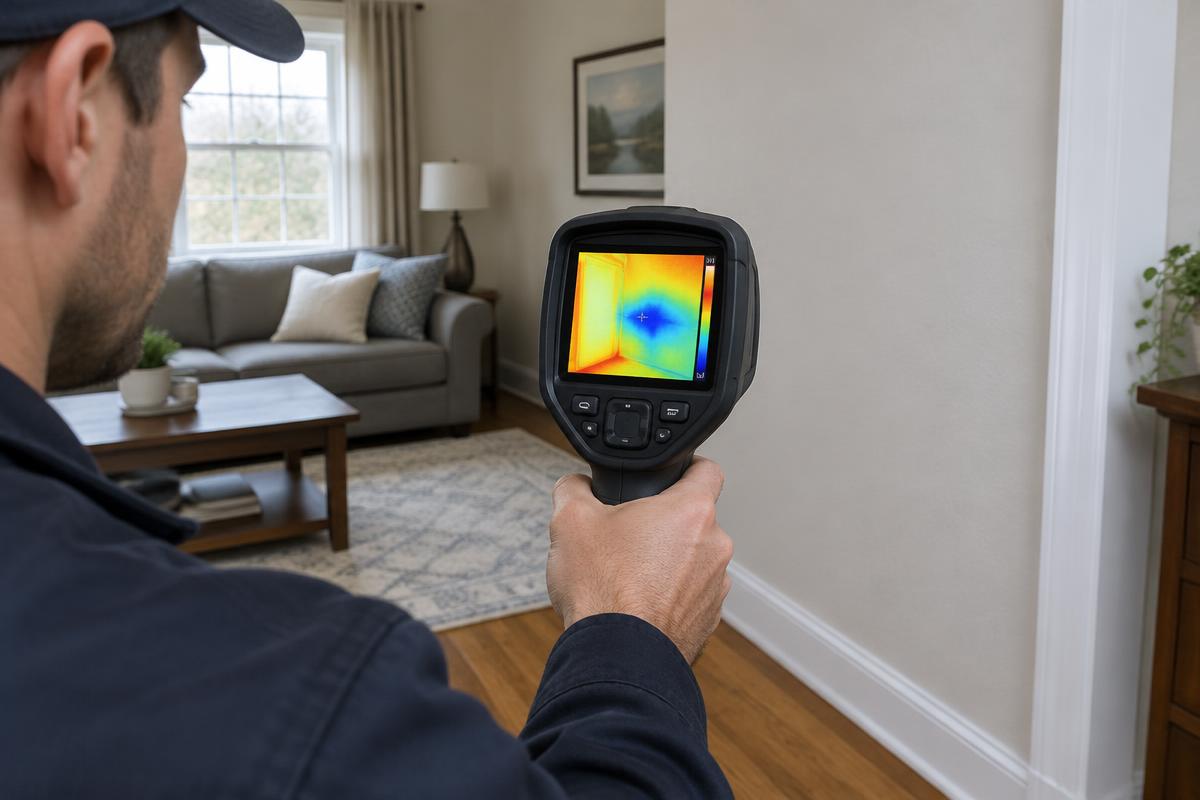
Hidden moisture is the reason many water damage problems come back. A wall can look dry on the surface while the insulation and framing behind it are still wet.
We use thermal imaging cameras together with moisture meters to locate and measure moisture without unnecessary demolition. Thermal cameras show temperature differences, which can indicate moisture; meters confirm it.
Common causes
- Slow plumbing leaks inside walls
- Previous water damage that was not fully dried
- Condensation problems
- Roof or window intrusion
Warning signs
- Unexplained stains or paint bubbling
- Musty odour without visible water
- Floors that feel spongy
- Higher than normal water bills
Immediate safety steps
- Avoid opening walls yourself if you suspect a leak near wiring.
- Turn off water to a fixture you believe is leaking until it is inspected.
How our thermal imaging and moisture detection process works
- 1
Visual inspection
We look for staining, swelling and other clues.
- 2
Thermal scan
A thermal camera scans walls, ceilings and floors for anomalies.
- 3
Meter confirmation
Moisture meters confirm whether an anomaly is actually moisture.
- 4
Findings
We explain what we found, show images and recommend next steps.
What to expect when you call
- Images and readings showing affected areas
- An explanation of thermal imaging limitations
- Recommendations for drying or further investigation
Homes and businesses
Residential: Useful after a leak to confirm drying, or when buying a home with suspected past water damage.
Commercial: Helps property managers locate leaks between units with minimal disruption.
Thermal Imaging and Moisture Detection in Richmond Hill
Thermal imaging works best with a temperature difference between indoors and outdoors, which Richmond Hill's cold winters and warm summers often provide.
Learn more about the areas we serve in Richmond Hill, or return to the Flood Services Richmond Hill homepage.
Thermal Imaging and Moisture Detection FAQs
Can thermal imaging see through walls?
No. Thermal cameras detect surface temperature differences. Cooler areas can suggest moisture, which is then confirmed with moisture meters.
Is the inspection invasive?
Thermal scanning and pin-less meters are non-invasive. Pin meters may leave tiny holes in some materials.
Do you find the actual leak?
We can often identify where moisture is concentrated, which helps a plumber or roofer locate and repair the source.